15 October 2026
A career that keeps evolving
Police officer, rally car racer, traveller, researcher and psychologist. Nick's journey to Corrections shows that the most rewarding careers aren't always the ones you plan from the start.
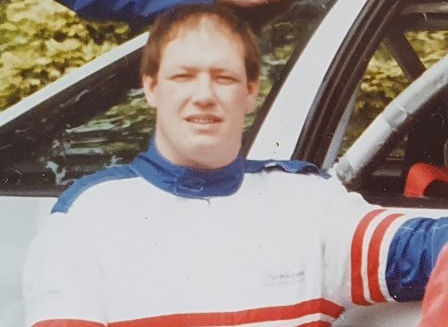
From school, Nick joined the police force, but after three years he was feeling unfulfilled. He left the force, travelled, raced rally cars, and did a range of jobs to support those hobbies.
After a trip around Europe in his late 20s, Nick returned to New Zealand and decided he wanted to shift gears, returning to education to learn an entirely new vocation. From his time in as a police officer, he had developed an interest in mental health and personality disorders.
"I went off to university wanting to become a clinical psychologist, although I didn't really know what that meant at the time. When I applied, I misspelt the word ‘psychologist’, which they took great delight in pointing out.”
Nick went on to complete the clinical training programme and his master’s degree. He did a placement at Corrections as part of his training and liked what he saw – so he actively pursued an internship at Corrections.
“I must have impressed them because even before I finished my internship year, they had offered me a full-time job. It turned out to be a really good decision. I was able to translate my interests into not only a career as a clinician, but also a career as a researcher.”
A career of impact and learning

“I was very lucky. I got department funding to conduct my PhD research while working for Corrections into the assessment of criminal psychopaths.”
Nick joined Corrections at a time when there were significant opportunities to shape both research and practice across the organisation.
“I was asked to develop the decision-making process that the Parole Board should use, ensuring consistency across the boards. I got to travel around the world and study parole decision-making processes, which gave me a real opportunity to make a difference.
“The framework helped bring greater consistency to parole decisions across New Zealand and, more than 20 years later, some of the assessments I designed are still being used.”
Nick says confidence and curiosity have played a big role throughout his career.
“Sometimes it’s about having the confidence. Sometimes I’ve had success because I’m the only one that’s read the book.”
An agent of influence
Reflecting on his long career at Corrections, Nick points to the continual opportunities to learn, innovate and make a difference.
“Making a difference for me now is being able to share experience and knowledge. I’m not in a managerial role where I can cause change to occur through position, so I have to do what I do through influence. Because of my enduring interest in psychology, Corrections and reading, I’m able to combine current knowledge with the experience I’ve gained throughout my career.”
Alongside his ongoing clinical and research work, Nick helps develop the next generation of Corrections psychologists, training practitioners to become experts in the measures and approaches he has helped create.
“I’m still quite heavily involved in training others. That’s exciting – I enjoy mentoring. Because I’ve worked across so many parts of the Department, I’m often seen as a trusted voice. A lot of influence comes from being a trusted source.”
It’s never too late to learn something new
“I came to Corrections when I was about 39.
“My CV starts when I went to university, because I know that no-one’s interested in the life before, but I believe you’re a sum total of everything you’ve done. My success as a psychologist comes down to my varied upbringing and my life experiences.”
Nick explains that there’s a significant problem of burnout in the field of clinical psychology, and a shortage of registered psychologists in New Zealand. He sees himself as an example – that it’s never too late to enter a new career, and that, with the right arrangements, people can continue to contribute in their later years.
“It’s about seeing the value in experience. The worst thing you want to do is believe that somehow knowledge is timed out.”
Looking ahead
Nick believes his own experience shows that a long career in one organisation doesn't have to mean standing still.
“There’s this opinion that you’ve got to keep moving to remain relevant – if you stay in one area too long, somehow your skills atrophy or you become pigeonholed into your current work.
“I’m the longest current serving psychologist at Corrections. It doesn’t seem a long time to me, because it’s been a very busy time. From the opportunities I’ve had, you can clearly see that you can have a pretty rich career within Corrections.”
Ready to make a move?
Start your journey - check out the a list of our current opportunities then apply online today!