9 March 2026
Role deep dive: Nurse
In this series, we look at some of our frontline roles at Corrections and help to break them down for jobseekers.
This article focuses on nurses, our staff working in the healthcare centres of our prisons to support a broad range of health concerns.
What do nurses do at Corrections?
Our nurses work in nurse-led healthcare centres within our prisons. Acting almost like a GP clinic, they work on a range of clinical issues, from emergency care to long-term condition management. They also play an important role in health education, helping to influence people’s health and wellbeing outcomes for when they leave prison.
“Corrections is a place that is not visible to the public, so there is a lack of awareness about what we do. This is a very interesting working environment. Though we are falling under the primary health umbrella, it is a mix. Nurses here do long-term condition management, acute care, dealing with trauma, unexpected medical events, mental health, drug and alcohol addiction… So, the variety that it offers is really beneficial. This is my 17th year and I still enjoy it.” - Health Centre Manager
Nursing at Corrections isn’t just about physical health – it often encompasses mental health, addiction treatment, rehabilitation, and Rongoā Māori.
There can be a deep satisfaction in supporting a prisoner’s health journey, and seeing people make personal steps forward.
“I love my job. I love helping people. The highlight is that when I see them in the receiving office, I get to be part of their health journey. And then when they stay with us, I get to see them become better, healthier versions of themselves. For me to see them recover from whatever substance abuse they were experiencing to becoming fully functional – able to attend programs – that's one of the highlights for me. There’s that satisfaction that I was part of that rehabilitation journey.” - Nurse
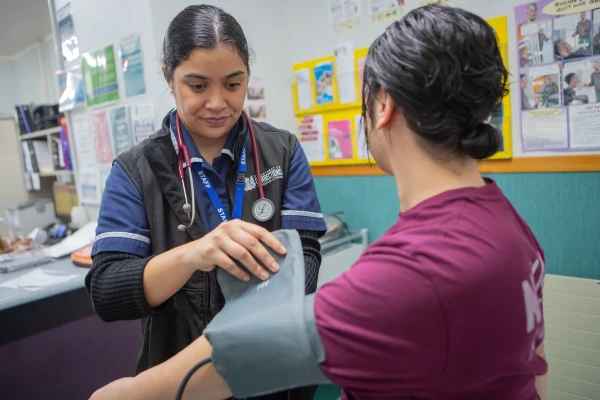
What makes a great corrections nurse?
The ability to provide non-judgemental care is important, as well as a sense of resilience and growth mindset. It’s also key for corrections nurses to enjoy working with others, as part of a wider team that goes beyond nursing and healthcare.
“Communication is very important. Other skills to be successful in establishing a rapport is being non-judgmental and open-minded.” – Nurse
Why become a nurse at Corrections?
Nursing in a prison can look quite different to other settings. The fact that the clinic is nurse-led introduces a lot of autonomy and opportunity for nurses to practice their assessment skills. It also gives them exposure to a broad range of clinical scenarios.
Job flexibility at Corrections enables nurses to enjoy a good work-life balance – there are no night shifts.
"The balance of no night shifts for me works well because I'm home by about half past three. It's still daylight, it's still sunny, you can still get things done. And then if you do the afternoon shift, you're still home in what I call the living hours." – Nurse
Another unique aspect is who they work with. Nurses are supported in their work by corrections officers, who help to create a safe working environment. They may work with other staff across the prison, as well as with allied health providers, iwi, whānau and hapū.
For mental health nurses, their role includes working with Te Whatu Ora Forensic Services, as well as psychologists, social workers, and Māori mental health practitioners.
“This is a different brand of nursing… it’s one where you get to use your clinical judgement every day.” - Nurse
Ready to make a move?
Start your journey - check out the a list of our current opportunities then apply online today!